
by SFXparish | Dec 29, 2019 | NEWS
Shoes for Rwanda:Thank you to all who made donations for the purchase of shoes for children in a Rwandan village. We raised $2,345.00 which is enough to purchase nearly 120 pairs of shoes for children to be able to attend school. This annual Advent fundraiser continues to have your great support. We are forwarding every penny of the raised amount to Father Leonard Kayondo so he can see that the funds go directly to the benefit of the Rwandan children.
by SFXparish | Dec 28, 2019 | NEWS
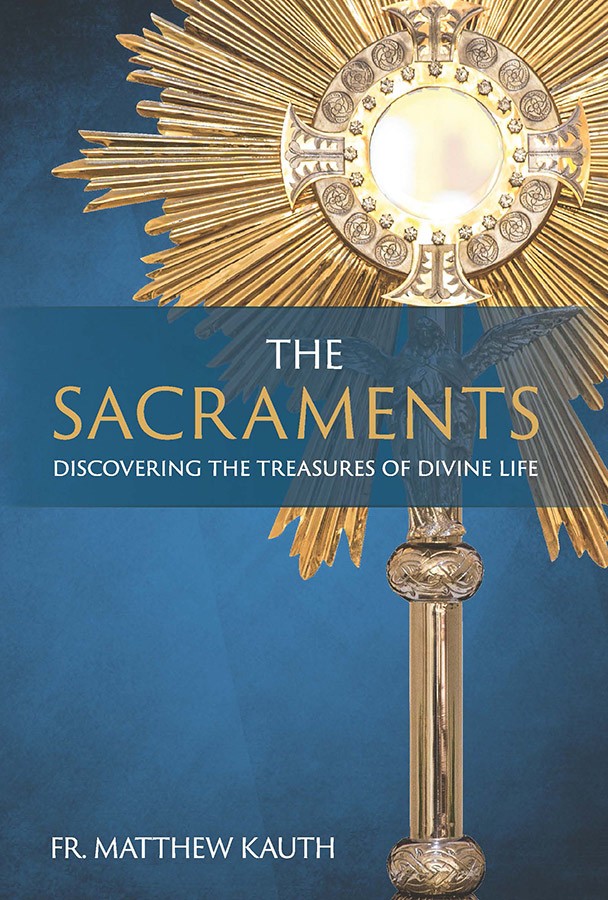
Parish Wide Book Study: As part of our continuing parish Adult Education program we will be offering an 8 week video series based in the book “The Sacraments” written by Fr. Matthew Kauth and which all parishioners will receive as a Christmas Gift from the parish. The subtitle of this book is “Discovering the Treasures of Divine Life” which fits in nicely with our parish Year of Grace. Father Matthew illuminates not only the scriptural foundation and profound spiritual realities of each sacrament but also the necessity of each sacrament as a means to living a happy and fulfilled life leading to heaven. We are offering different days and times for you to view this video series with us in the parish center hospitality room. We will present on Tuesdays at Noon and Thursdays at 9:45 am and 7:00 pm for 8 weeks. The first showings will be on Jan 28th and 30th respectively. Various parish staff will facilitate the video and be available to answer questions after the video. There is no cost to participate.
by SFXparish | Dec 27, 2019 | BLOG
When the magi had departed, behold, the angel of the Lord appeared to Joseph in a dream and said, “Rise, take the child and his mother, flee to Egypt, and stay there until I tell you.” (Mt 2:13)
“He was the husband of Mary and the foster father of Jesus”; so that is what we commonly say when asked about Saint Joseph. In further consideration of the community of saints in heaven, we also call him “the patron of the universal Church”, for we attest that St. Joseph still guards Christ’s mystical Body in the world such as he guarded Christ Our Lord on earth.
There are so many things that could be said of this great saint, however today we focus on Joseph the vigorous visionary. Joseph was visited by an angel who told him to take Mary as his wife even as she had been found with child (Mt 1:20). Joseph received divine instruction to carry the infant Jesus and Mary away from the enemies of God. He then received another angelic communication to return from exile to the Holy Land when the enemies of God had died (Mt 2:13). “Rise”, “Take”, “Flee”; “Stay”: the visions of Joseph happened with real imperatives in real time producing real outcomes.
Joseph was accounted to be of the bloodline of David (Mt 1:16). He is also a descendant of the spiritual lineage of Abraham. We recall God saying to Abraham, “Go forth… to a land that I will show you” (Gn 12:1) just as he says today in our Gospel quotation, “Rise, take the child and… mother, flee to Egypt.” Joseph appears thus as the last patriarch of Israel. Yet, Joseph also fully anticipates the Gospel sentiment of willingness long before Peter declared from his fishing boat, “Command me Lord…” (Mt 14:28). And it is likely that Joseph, more composed than the enthusiastic Peter, would have walked on the waves toward Jesus with less concern for the raging waters.
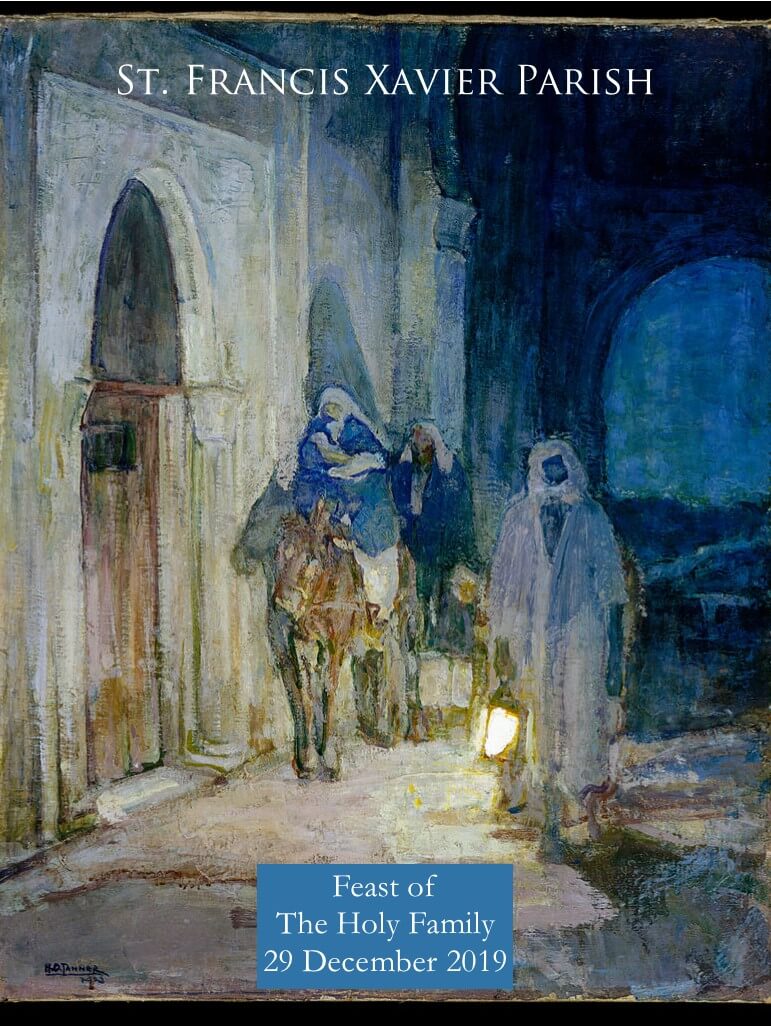
For this Feast of the Holy Family we place on our bulletin cover a work by the French-inspired, American painter Henry Ossawa Tanner, entitled Flight into Egypt (1923). Tanner was a self-studied African-American artist who later trained in Paris absorbing the realism of Courbet and the loose brush strokes of French Impressionism.
Tanner’s religious works display a gritty mysticism. This image has the deep lapis lazuli blue tones of the Florentine master Giotto lending it a romantic, medieval air. However, the soft sweep of Tanner’s contemporary and realistic palate allows us to reflect on the true danger of this secret escape. St. Joseph has taken up the rear guard while the enigmatic blue figure in the front, a creature of heaven, carries the divine light that Joseph has proven himself so keen to follow. The resplendent illumination of this work emotes in us the faith necessary to move forward past opacity and difficulty.
“Command me, Lord”. This is how we surmise the prayer life of Joseph. This prayer is not bashful, since its voice is in the imperative mood. While Joseph followed faithfully the dominion of God, he also exercised a confident temper that would have called upon God authoritatively: “Save me, Lord”; “Counsel me, Lord”; and “Guide me Lord” are certainly other imperative prayers – fine examples of what our prayer should be.
-Steve Guillotte, Director of Pastoral Services
by SFXparish | Dec 19, 2019 | BLOG
If I ascend to the heavens, you are there; if I lie down in Sheol, there you are. If I say, “Surely darkness shall hide me, and night shall be my light” darkness is not dark for you, and night shines as the day. Darkness and light are but one. (Ps 139:8; 11-12)
Jesus, whilst He was personally present on earth, named himself the Light of the World (Jn 8:12). This is in keeping with the prophet Isaiah’s foretelling that the savior of Israel would be a light for the nations (Is 42:6). Isaiah tells us that the savior will come establishing justice, teaching those awaiting instruction (Is 42:4), and freeing those living in the darkness of idolatry (Is 42:7-8). To move from injustice to justice, from ignorance to wisdom, and from idolatry to authentic worship is to walk in the way of the light of Christ – on the path of illumination of the savior of the world. This is the purposeful meaning of the brilliance of Christmas and is it fitting that what comes before the celebration of the birth of the Christ is Advent (light awakening), while what concludes our celebration is Epiphany (light manifesting).
You cannot hide from Christmas any more than you can hide from the light of Christ. As the psalmist writes in our quotation above, there is no place you can go where God has not already been, except perhaps to a region of sin. Yet even the infant Jesus, born without sin, grew to live out the consequences of sin through his own human suffering and death. However, being God, Jesus brought light even to death; even death cannot conceal you from God. It is as the psalmist says elsewhere: “… the Sun comes forth like a bridegroom from his canopy… From one end of the heavens it comes forth; its course runs through to the other, nothing escapes its burning heat (Ps 19:5-7). Christ comes today not only to enlighten Israel, but to illumine the whole universe; and just as man’s flesh cannot escape His light, neither can man’s soul ever escape the scorching heat of the divine conscience residing within him.
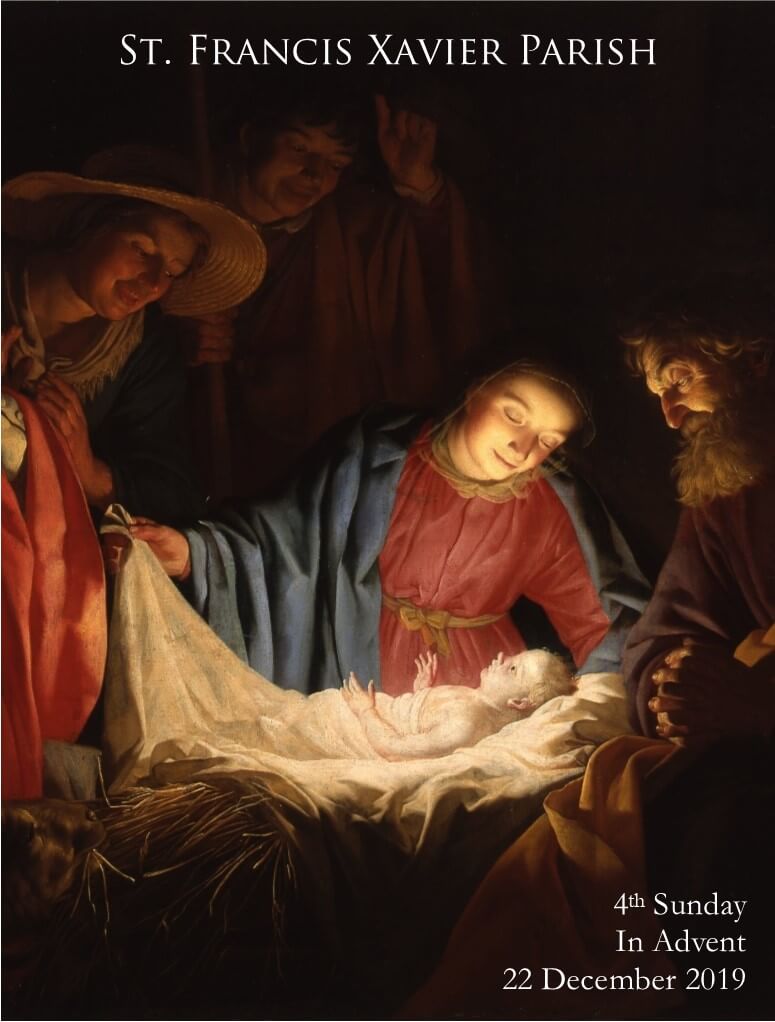
In honor of the divine light of Christ we place on our bulletin cover for this 4th Sunday in Advent and for our Christmas celebration a painting by Gerard van Honthorst, a Dutch artist of the Golden Age. Honthorst was also known as “Gerard of the Nights” for his masterful use of the Tenebrist style in illuminating darkness with unsuspecting light. The work we are using – that which we examine today – is entitled Adoration of the Christ Child .
In this image, Jesus is the sole source of light. Some of this light is shed upon the shepherds set semi-circularly above the divine infant. More light is shed upon Joseph (right) who looks down in a prayerful posture of adoration. Most of the light is reserved for the Blessed Virgin Mary shown not only receiving the light of Christ joyfully but also revealing the light by lifting the linen. Mary defines the divine light between her outstretched arms forming Our Lord Jesus into the shape of a bright crescent moon.
Honthorst reminds us that illumination and adoration are one. We come this day to adore the illumined one of God just as we are illumined through our sincere adoration.
-Steve Guillotte, Director of Pastoral Services
by SFXparish | Dec 12, 2019 | BLOG
“Strengthen the hands that are feeble, make firm the knees that are weak, say to those whose hearts are frightened: Be strong, fear not! Here is your God…” (Is 35: 3-4)
Every liturgical year just before the season of Advent, the Church makes its annual attempt to remind the people of God of the “four last things”: death, judgment, heaven and hell. One way to measure the success of this effort of preaching and teaching of the four last things is to ask ourselves a follow-up question: Have we effectively instilled in the people a clear enough sense of feebleness, weakness, and trepidation sufficient to bring about a palpable relief and recovery during Advent?
It is fair to say that many in the Church have lost a proper religious awareness of the fearful. In fact, many of our own bishops and theologians have come to dismiss the fearful power of God and to discount hell entirely as fairy-tale or biblical allegory, too outdated for modern consideration. While regular reminders of the reality of hell will always be well-advised as a bulwark against temptation, it is also true that we must not see the fear of the Lord solely as a prevention against sin. We must also see it as a promotion toward virtue – as a method for spiritual progress.
The sage of the Book of Proverbs shows great understanding of this notion by declaring the fear of the Lord to be the beginning of wisdom (Prov 1:7). Further, the prophet Isaiah declares the fear of the Lord to be a gift of the Holy Spirit (Is 11:2) and of such great spiritual import that it is the virtual “delight” of the Messiah (Is 11:3). Thus for the Christian, the fear of the Lord is not only the beginning of wisdom but also its fulfilment, since what begins naturally in man as fear of punishment due to vice, becomes instead fear of offending the God we love due to virtue. Further, Isaiah’s reference to feebleness, etc. in the quotation above helps us to understand that we are to put away the fears of this world so that we may approach the fear of the Lord in proper humility and trust.
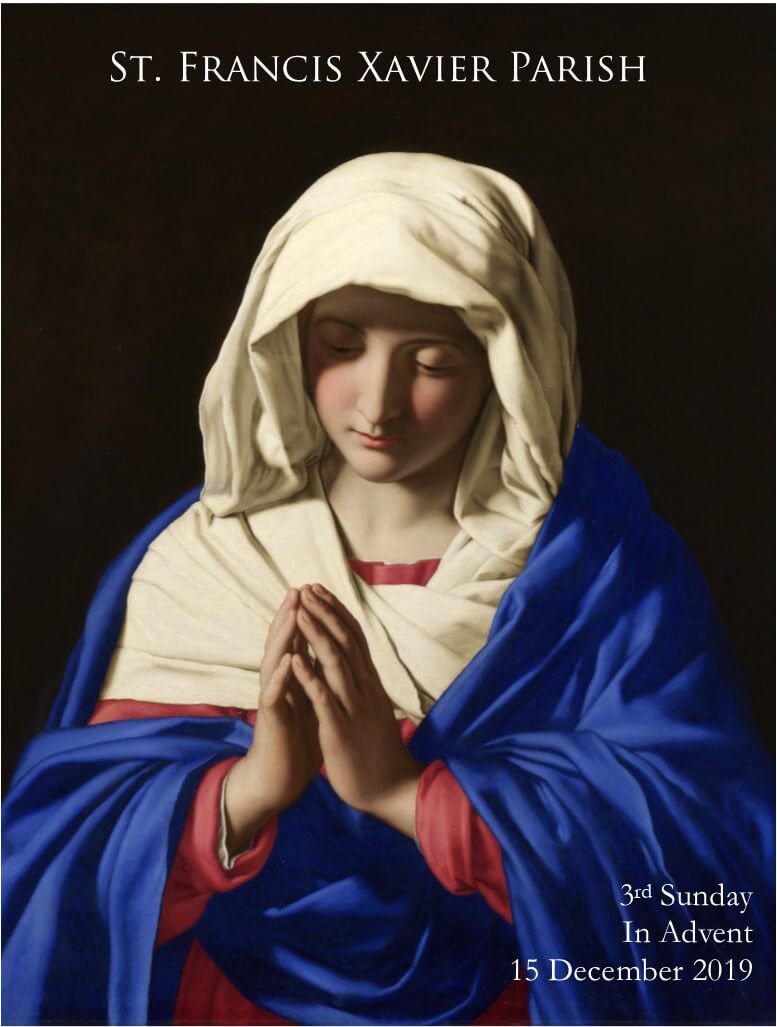
Humility moving one to trust is displayed nowhere more profoundly than in the Blessed Virgin Mary. Hence, we are raising her up as our Advent guide in the fear of the Lord. In keeping with this proposition we place on our bulletin cover for this 3rd Sunday in Advent a work by the Baroque painter Giovanni Battista Salvi da Sassoferrato entitled The Virgin in Prayer (1650) now held in the National Gallery, London. Sassoferrato was actually the town Giovanni lived in which was about equidistant from the artistic powerhouses of Florence and Rome. The baroque of Giovanni appears subdued because of his particular interest in the classical work of Raphael, which made Giovanni’s works cherished as silent, devotional images during the Counter Reformation.
Here we see Mary, statuesque, in deep prayerful reflection. Let us say that this is the moment when the angel had just departed after offering her the good news and counseling her to accept it without trepidation (Lk 1:30). No doubt Mary found favor with God because she was full of the grace of the fear of the Lord, for as Mary herself declares: God “has looked upon his handmaid’s lowliness” and named her “blessed” (Lk 1:48).
-Steve Guillotte, Director of Pastoral Services